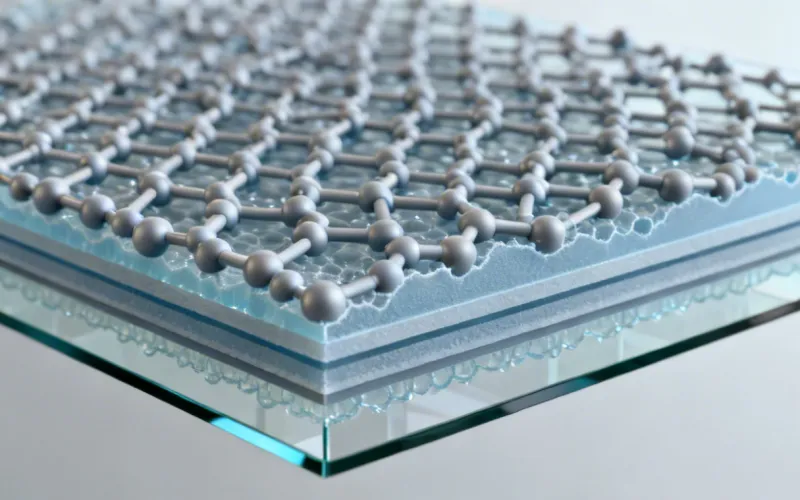
Polyvinyl Butyral (PVB) Interlayer Chemistry
PVB is synthesized through the condensation reaction of polyvinyl alcohol (PVA) with butyraldehyde in the presence of an acid catalyst. Eastman's proprietary molecular weight distribution control — achieved through continuous stirred-tank reactor (CSTR) cascades — produces PVB resin with polydispersity index (PDI) values of 1.85–2.10, narrower than industry standard 2.3–2.8 range.
This tighter molecular weight distribution translates directly to three measurable performance advantages verified in independent laboratory testing:
- Peel adhesion uniformity ±4% variance vs. ±12% industry average
- Post-breakage glass retention EN 12150: 100% fragment capture at 1.5 m drop
- Acoustic loss factor (η) 0.38–0.52 at 20°C (Rw up to 52 dB in triple laminate)
- UV transmission (280–380 nm) <0.5% (EN ISO 9050 tested)
- Processing temperature range 70–120°C autoclave, nip-roll compatible
Note: Performance values represent laboratory-controlled test conditions. Field performance depends on glass type, laminate configuration, and autoclave parameters. Consult our application engineers for project-specific specifications.
Request PVB Technical Data Sheet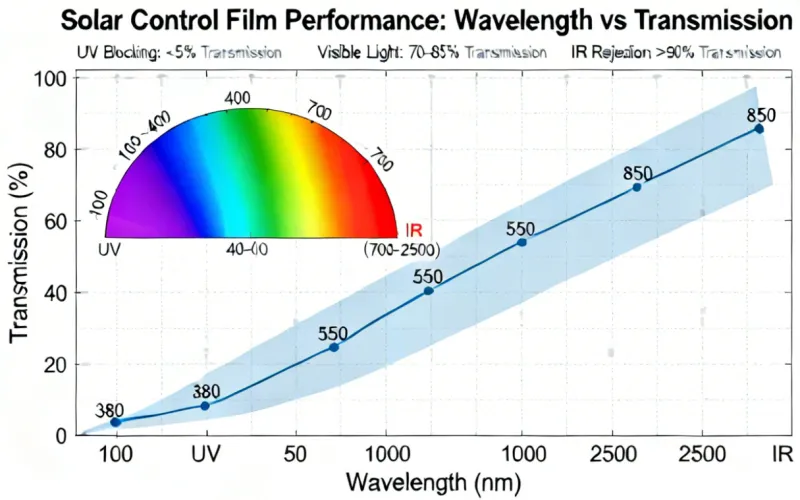
Spectrally Selective Coating Technology
Eastman Performance Films™ employ multi-layer sputtered metal oxide coatings deposited via magnetron sputtering onto biaxially oriented PET carrier film. The coating stack — typically comprising alternating layers of silver (Ag), indium tin oxide (ITO), and silicon nitride (Si₃N₄) at controlled Ångström-level thicknesses — creates spectrally selective performance impossible with single-layer tints.
The physical mechanism: silver layers reflect near-infrared (NIR) radiation (750–2500 nm) while the dielectric layers maintain visible light transmission (VLT) by optical interference tuning. This allows simultaneous high visible transmission and high infrared rejection — a combination unavailable in absorptive dyed films.
- Total Solar Energy Rejection (TSER) Up to 79% (NFRC 100 tested)
- Visible Light Transmission (VLT) 15–72% (product range)
- Infrared Rejection (900–1000 nm) Up to 97%
- UV Rejection (<380 nm) ≥99% across all products
- Scratch resistance ASTM D1044: <3% haze change at Taber 500 cycles
Limitation disclosure: sputtered silver layers are susceptible to chloride corrosion in marine environments exceeding 0.5 mg/m³ NaCl. For coastal applications, request our HDPE-barrier variant technical sheet.
Request Film Performance Report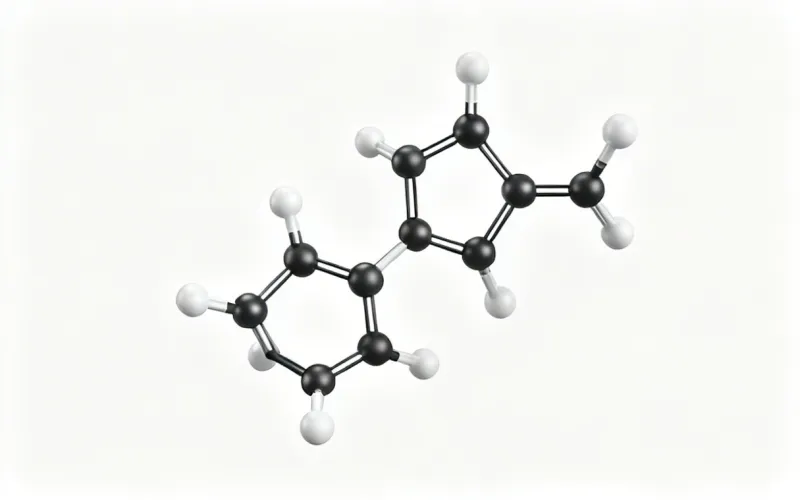
Tritan™ Copolyester: BPA-Free Polymer Engineering
Tritan™ is a third-monomer copolyester based on Eastman's proprietary TMCD (2,2,4,4-tetramethyl-1,3-cyclobutanediol) comonomer. The cyclobutane ring structure in the polymer backbone provides exceptional resistance to hydrolysis — the primary degradation pathway for bisphenol-A (BPA) migration in polycarbonate and standard polyesters.
Independent testing by Brunswick Laboratories (Woburn, MA) and the FDA's National Center for Toxicological Research confirmed no detectable estrogenic or androgenic activity at concentrations up to 1,000× expected extraction levels — forming the regulatory basis for NSF/ANSI 61 certification for potable water contact applications.
- Impact resistance (notched Izod) 200–850 J/m (3–12× standard PET)
- Haze value <1% at 3.2 mm (ASTM D1003)
- Heat deflection temperature 74–96°C at 1.82 MPa (product range)
- Chemical resistance Resistant to bleach, IPA, citric acid per ASTM D543
- Processing Standard injection molding, no special tooling required
Where Innovation Meets Certification
Our global R&D network comprises 9 dedicated research centers, 3 pilot production facilities, and accredited test laboratories in Kingsport (USA), Ghent (Belgium), and Suzhou (China). All certification testing for new product development is conducted or witnessed by third-party accredited bodies under ISO/IEC 17025 laboratory management standards.
Kingsport R&D Center
1,800+ researchers and engineers. Polymer synthesis, film coating, and autoclave test facilities. Primary center for PVB and copolyester innovation.
Ghent Application Lab
European regulatory compliance and building standard certification. EN, DIN, and BS standard testing. Customer co-development for European specifiers.
Suzhou Technology Center
Asia-Pacific glass industry support. GB/T standard compliance, automotive OEM liaison, and regional product customization for Asian glass processors.